
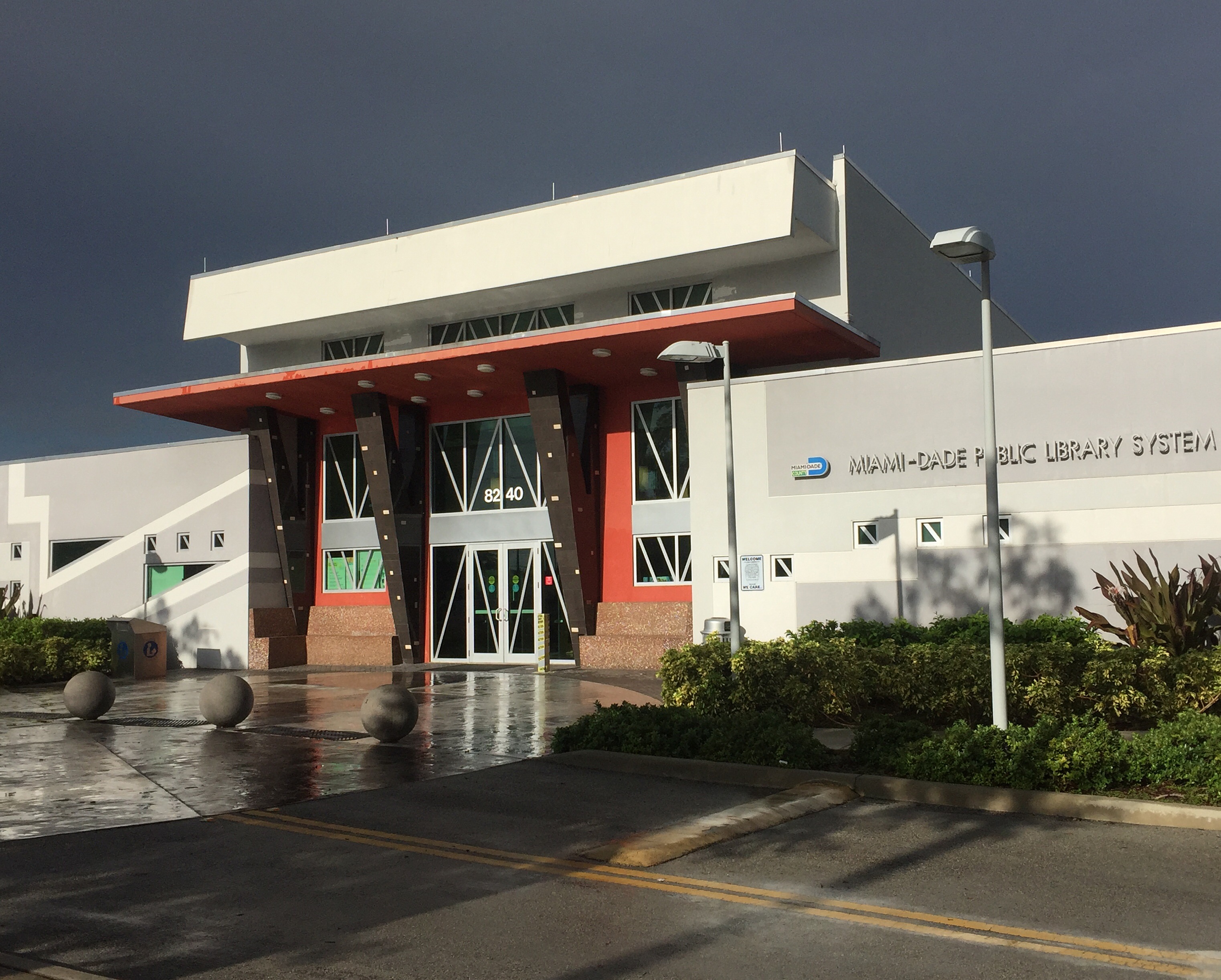
Key Biscayne's new two-story library at 299 Crandon Blvd. is moving forward despite a November ballot measure that library advocates estimate could cost the Miami-Dade Public Library System $20 million in property tax revenue in its first year.
Lydia Lopez, director of the Miami-Dade Public Library System, told the Islander News on Aug. 19 that the 20,000-square-foot project is "currently budgeted and moving forward as planned." She said the system does not anticipate an interruption to construction even if Amendment 3 passes.
Crews broke ground May 26, and construction is visible from Crandon Boulevard. County documents have previously projected completion in 2027, though the latest Islander News report points to a 2028 opening. While the permanent building is under construction, a temporary library is operating in Suite 101 of Key Colony Plaza at 200 Crandon Blvd.
The replacement library is funded through several sources. Miami-Dade's capital plan allocates about $17.1 million from the Library Taxing District, $8.3 million from Building Better Communities general obligation bonds and $500,000 from a state grant.
How Amendment 3 would change property taxes
Amendment 3, titled "Increased Homestead Exemption; Lower Cap on Increases in Non-Homestead Property Assessments," would increase the homestead exemption for nonschool property taxes to $150,000 in 2027 and $250,000 in 2028, with inflation adjustments after that.
The measure would also reduce the annual cap on assessment increases for nonhomestead property from 10% to 5%.
The amendment needs at least 60% voter approval on the Nov. 3 ballot to pass and would take effect Jan. 1, 2027.
The Miami-Dade library system relies heavily on property taxes collected through the Library Taxing District. If Amendment 3 passes, the increased exemption would reduce the taxable value of homesteaded property available to support the system.
Marylynne Schwartz, president of the nonprofit Friends of the Miami-Dade Public Library, estimated the system could lose about $20 million in its first year.
"I'm terrified," Schwartz told WLRN on June 26. "At a library level, this threat is absolutely existential."
Lopez outlined potential systemwide consequences, including reduced library hours, smaller book and digital collections, fewer technology resources, cuts to programs and services and deferred maintenance at existing branches.
County and village could also lose revenue
The potential revenue effects extend beyond libraries.
State economists project Amendment 3 would reduce local government property tax revenue by roughly $5 billion statewide in its first year and $11.8 billion annually after five years, according to Key Biscayne Portal.
Miami-Dade County Mayor Daniella Levine Cava has projected the county could lose $386 million in revenue in the first year, with the annual shortfall increasing to $696 million by 2028.
A preliminary estimate provided to the Village of Key Biscayne put its potential revenue reduction at about $800,000 in the first year and $1.6 million in the second year.
Key Biscayne figures challenged ballot language
Key Biscayne figures were also involved in litigation challenging how Amendment 3 would be presented to voters.
Former Mayor Mike Davey and Village Attorney Chad Friedman were identified by the Islander News as among the plaintiffs in lawsuits that led Leon County Circuit Judge David Frank to order the ballot language rewritten in August.
Frank found the original title, "Save Our Homes From Excessive Property Taxes," was not sufficiently neutral, describing it as "more akin to a political slogan." The ballot title and summary were subsequently rewritten.
A new chapter for Key Biscayne's library
The existing Key Biscayne library dates to 1985, when the island received a permanent branch after previously relying on bookmobile service.
The new building will replace that branch with a two-story, approximately 20,000-square-foot facility.
Whatever voters decide on Amendment 3, Lopez said funding already allocated to the Key Biscayne project remains in place.
Voters will decide Amendment 3 on Nov. 3. Project renderings and information about the new library are available through the Miami-Dade Public Library System.



.jpg)