
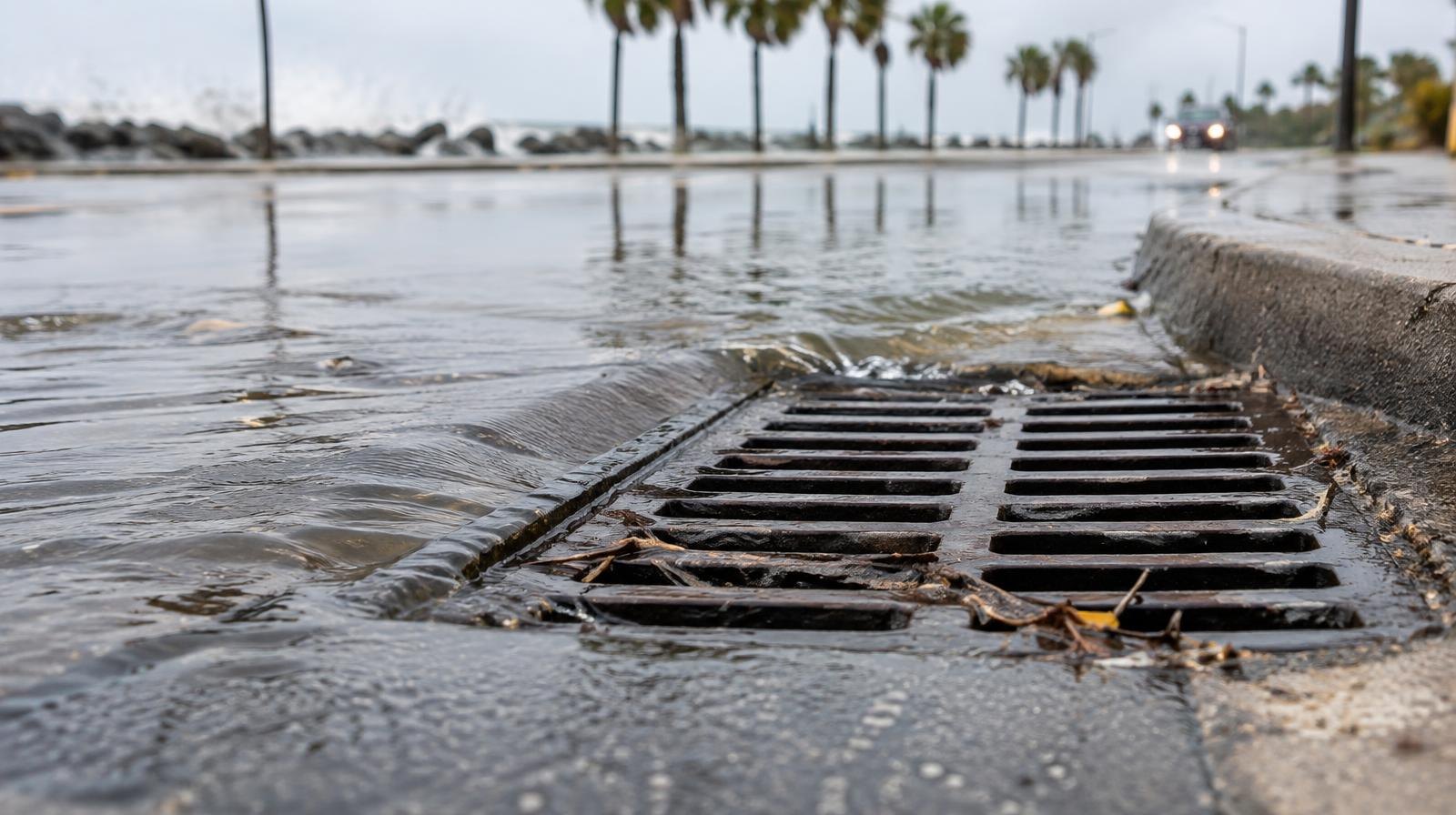
Key Biscayne's stormwater system can handle barely a fifth of what the island needs, and a major new ocean science report says the seas feeding that problem are rising faster than ever.
The 10th Copernicus Ocean State Report, released Wednesday, Sept. 30, found that global sea levels have risen nearly 4 inches since 1999. The report, which its authors called their "starkest warning yet," drew on four decades of satellite and sensor data compiled by 125 scientists. CNN first reported on the findings.
Sea levels rose an average of 3.8 millimeters per year between 1999 and 2025, the report found. Since 2012, that rate has climbed to 4.2 millimeters per year, according to the EU's Copernicus monitoring service. Ocean warming has doubled over the past 20 years. Sea surface temperatures set records in 2023, 2024 and again in 2026.
"For island states, ocean change is not a distant environmental issue; it is an immediate economic, development and security challenge … and a warning of what many other coastlines will face in the future," said Karina von Schuckmann, senior advisor at Mercator Ocean International and a director of the report.
Those findings have particular relevance for a 1.25-square-mile barrier island where 90% of residents said flooding was a problem in a March 2024 Village community survey.
Stormwater system meets about 19% of approved capacity
Key Biscayne's existing drainage system can handle about 302 cubic feet per second. The level of service the Village Council approved in April 2024 calls for roughly 1,587 cubic feet per second, according to a Village white paper on pumps and wells.
That means the existing system provides about 19% of the approved level of service.
The white paper warned that the island's gravity drainage wells will lose effectiveness as sea levels and groundwater tables rise. It urged the Village to plan well beyond 2030, noting that large infrastructure projects take years to complete and the island "cannot get behind this acceleration curve."
Village plans $24 million in stormwater spending
The Village's proposed fiscal year 2027 budget totals $119 million, with $56.2 million earmarked for infrastructure and resilience, according to the Key Biscayne Independent.
The two largest capital items are $29 million for utility undergrounding and $24 million for stormwater improvements. A final budget vote was scheduled for Sept. 22, but the outcome has not been publicly confirmed.
Sea-level projections extend through 2070
Planning documents the Village already uses forecast 10 to 17 inches of additional sea-level rise by 2040 and 21 to 54 inches by 2070, based on the Southeast Florida Regional Climate Change Compact's 2019 estimates cited in a Village resilience presentation. The Copernicus report found global rates are accelerating beyond what scientists measured before 2012.
The Village's Resilient Infrastructure and Adaptation Program estimates that every $1 invested in stormwater upgrades prevents roughly $5.46 in flood damage, based on FEMA's benefit-cost calculator. The Zone 1 project near the K-8 school carries an estimated price tag of about $75 million and was in the design phase as of late 2024.
The fiscal year 2027 capital plan includes 34 projects and relies on $36 million in General Obligation Bond borrowing. Voters authorized up to $100 million in resilience bonds in 2020, but each issuance requires a supermajority vote of the Village Council.
Village Manager Steve Williamson's administration estimates utility undergrounding alone will need an additional $13 million in 2029 and $15 million in 2030.



.jpg)