
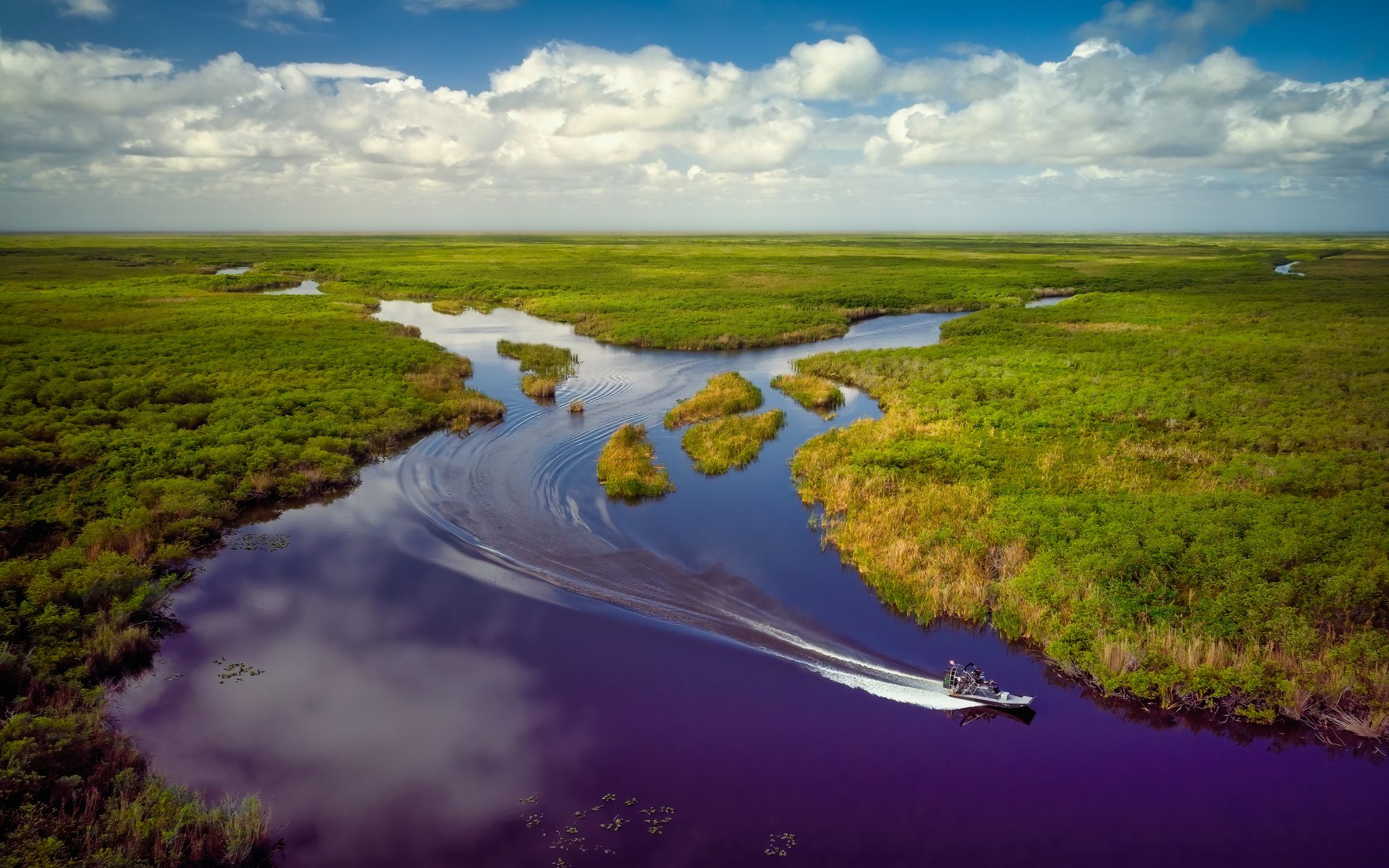
Nearly 24,000 acres burned across three wildfires in Everglades National Park in August. The extreme drought fueling them raises long-term concerns about the peat soil that filters the Biscayne Aquifer and helps block saltwater intrusion, though available reporting does not establish an immediate threat to Key Biscayne's drinking-water supply.
The central Everglades between Shark River and Taylor Slough remained under extreme drought conditions in late August even as the rest of South Florida began to recover, the National Weather Service reported. Water levels across sawgrass marshes dropped below normal and, in some places, below ground. Little water was flowing south, and scientists continued to raise concerns about Florida Bay salinity.
The Miami Herald reported Thursday that the drought has left peat soil vulnerable to fire and collapse. That peat acts as a filter for the Biscayne Aquifer, the region's primary drinking water source for Miami-Dade, Broward, Monroe and parts of Palm Beach County.
Drinking water connection
John Kominoski, a biology professor at Florida International University and principal investigator of the National Science Foundation's long-term Everglades research program, said peat provides a cap for the shallow aquifer, cleaning and filtering freshwater. It also resists saltwater intrusion fueled by sea-level rise.
"The peat is like a wet sponge, and a wet sponge will resist some of the water coming in that's salt water," Kominoski told the Herald. "But a dry sponge will wick it all the way in."
At the southern end of the Everglades, where marshes are most starved for freshwater, peat has started to collapse. Shallow sawgrass marshes are ripping open, leaving behind deeper pits of open water. Kominoski said rebuilding lost peat takes centuries or longer.
The fires
A National Park Service update on Monday, Aug. 24, listed three named fires. The Chipmunk Fire, the largest, had burned about 17,000 acres. The Movie Dome Fire had burned about 6,207 acres. The Vulture Fire had burned about 347 acres. All were caused by lightning.
The Chipmunk Fire was first reported Friday, Aug. 21, about two miles southwest of Shark Valley. By Wednesday, Aug. 26, it had burned nearly 18,000 acres and was 90% contained, according to the Key Biscayne Portal and the Herald.
Shark Valley, including its visitor center, trails and tram road, reopened at 1 p.m. Aug. 24 after its emergency wildfire closure.
The drought is unlike anything Kominoski's team has seen. In a normal dry year, his field crews switch from helicopters back to airboats by July. In 2026, they stopped using airboats in January and were still relying on helicopters to reach field sites as of late August.
Water supply under pressure
The South Florida Water Management District (SFWMD) reported to its governing board in August that water levels in the conservation areas just north of the park dropped to their lowest in early June. Levels started climbing in July but remain far below normal.
SFWMD Chief Engineer John Mitnik told board members at the August meeting that Water Conservation Area 3, which feeds freshwater south toward the park and the aquifer, "continues to just bounce around the floor elevation." Lake Okeechobee remains well below average and under water-restriction rules, limiting how much water can flow south.
Parts of Florida Bay remain too salty. Scientists warn that if insufficient freshwater flow continues, seagrass could start dying.
SFWMD issued a Water Shortage Warning on Feb. 5 for Miami-Dade and Monroe counties. The district rescinded it March 30 after rain and conservation efforts helped restore aquifer levels. But the central Everglades has not recovered.
What comes next
WLRN reported that a strengthening El Niño could favor a wetter winter pattern, but its local effects remain uncertain. Relief is not forecast to arrive until October at the earliest.
No public statement from Miami-Dade Water and Sewer or Key Biscayne Village officials addressing the drought's long-term threat to local water supply appears in public records as of publication. The SFWMD governing board meets monthly.





.jpg)