
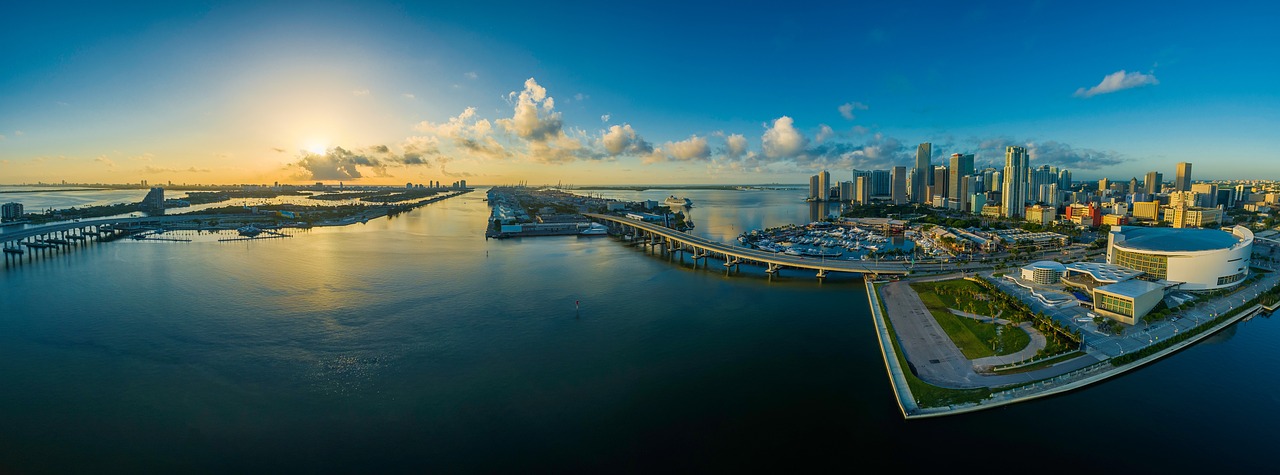
Nearly 1 in 4 active Miami condo listings carries a special assessment, and older coastal buildings — common in Key Biscayne — appear likeliest to carry one, based on building-age patterns in the data.
A report by Li Bensimon, a real estate agent at Bensimon Luxury, analyzed 10,157 active condo listings in Miami as of Sept. 5. Of the 7,974 that answered the polling question, 23.7% declared a special assessment, according to Islander News, which published the findings Sept. 18.
The split by building age tells the story. In buildings finished before 1998, 35.9% declared an assessment (1,470 of 4,090 that responded). In buildings finished in 1998 or later, the rate dropped to 10.8% (420 of 3,884). That makes a pre-1998 condo 3.3 times as likely to carry one.
For Key Biscayne, where many towers went up decades ago along the coastline, the pre-1998 category is hard to ignore.
Assessment rates by decade
Buildings constructed in the 1960s, 1970s and 1980s hovered around 40% for declared assessments, the report found. The 1990s cut that roughly in half. Buildings from the 2010s came in at 4.3%.
By neighborhood, Aventura led at 32%, followed by Surfside and Bal Harbour at 25.4%, Sunny Isles Beach at 23% and Miami Beach at 22.5%. Brickell registered 12.7% and Downtown Miami, 11.7%.
Bensimon summarized the pattern: older coastal towers carry the assessments, while the post-2005 urban core mostly does not.
What a special assessment means
A declared assessment does not signal an unsafe building, Bensimon said in the report. It means the condo association levied a charge beyond the regular budget for items such as concrete restoration, a roof, a seawall, elevators, insurance or reserve catch-up.
"Some of the best-run associations in Miami sit in 1970s towers that did the structural work early, funded the reserves, and are now the safest purchase on the beach because the (recertification) bill is behind them," Bensimon said.
"What I'd do is stop treating 'no special assessment' on a listing as an answer. Read the box. If it's blank, ask why."
She also warned that a blank field on a listing is not the same as no assessment. Of the 10,157 listings surveyed, 2,183 did not answer the question at all.
The 1998 dividing line ties to Miami-Dade County's recertification rules. The county revised its standard June 1, 2022, replacing a flat 40-year inspection clock. A coastal condo of three or more habitable stories within 3 miles of the coastline, built 1998 or later, now faces a 25-year recertification deadline. Most other buildings built 1993 or later are on a 30-year clock, with inspections every 10 years after that.
An independent milestone-inspection tracker, Fortis BuildSafe Solutions, confirmed the rule under Section 8-11(f)(ii)(1) of the Miami-Dade County Code as of Aug. 20.
Questions buyers should ask
Bensimon's report recommends condo buyers pose four questions before signing:
- Can I see the most recent reserve study?
- May I see the last two budgets?
- Has the milestone inspection been done, and what did Phase Two find?
- If there is no assessment now, why won't there be one next year?
Under Section 718.116 of the Florida Statutes, a delinquent assessment accrues interest at the rate stated in the declaration, or 18% a year if the declaration is silent, the report noted. An administrative late fee of up to the greater of $25 or 5% of each late installment can also apply. Payments go first to interest, then the late fee, then collection costs and attorney fees, and last to the assessment itself.
The association holds a lien on the unit and can foreclose. An owner who disputes a recorded lien can file a notice of contest, giving the association 90 days to sue or the lien becomes void.
Bensimon advised sellers to always declare an existing assessment. A declared assessment with a payment plan is a negotiable fact, she said. An undeclared one that surfaces in the estoppel letter kills the deal.




.jpg)