
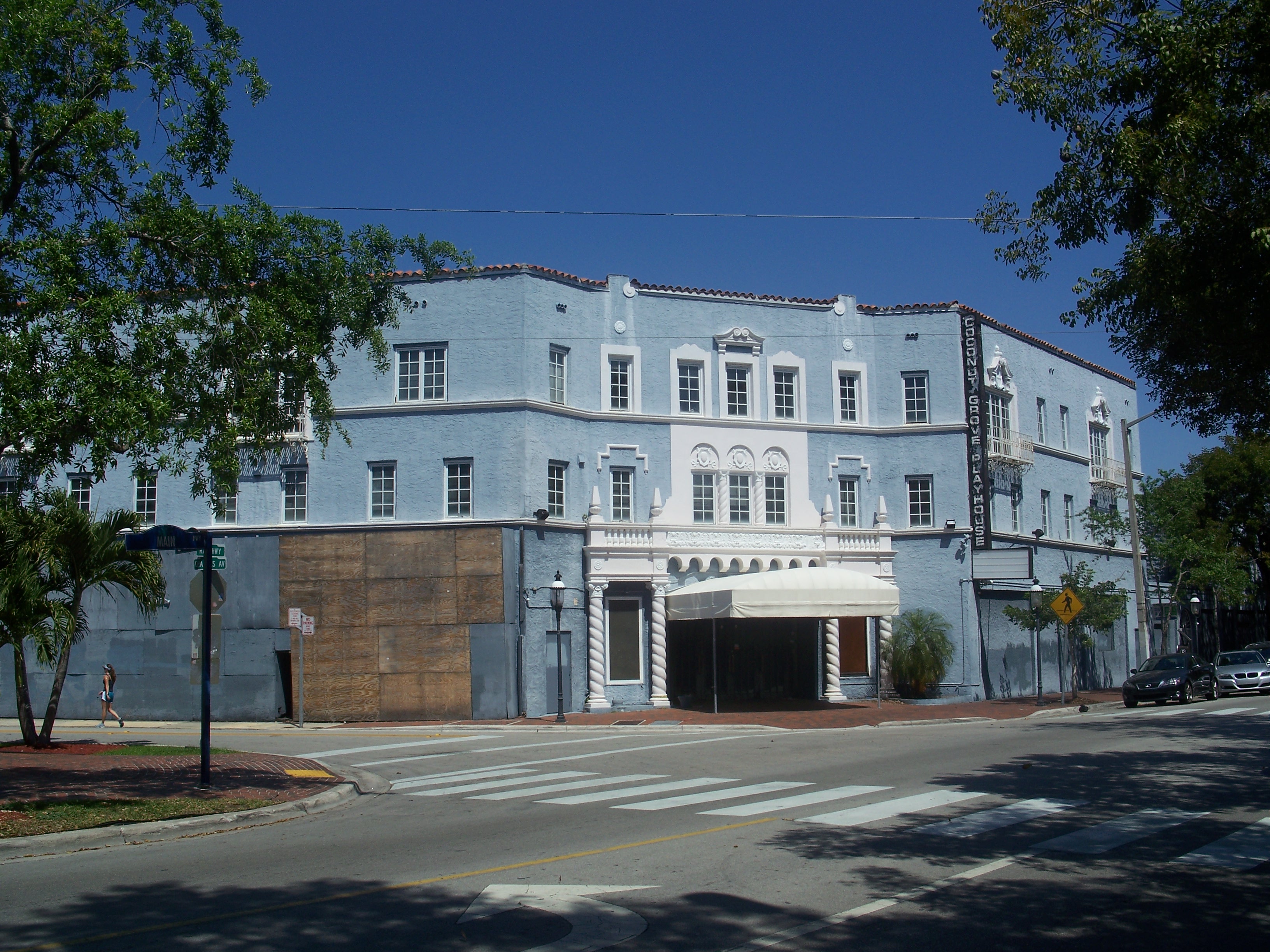
The Coconut Grove Playhouse site at 3500 Main Highway is finally getting a new life. After nearly two decades as a condemned shell flanked by a treeless parking lot, the project to rebuild the historic theater cleared a critical city hurdle Thursday. The Miami City Commission voted unanimously to grant Miami-Dade County the zoning relief it needed.
The approval means a 310-seat theater, a 289-space parking garage and 37,000 square feet of commercial space are coming to the southern gateway of the Grove. For local businesses that have long cited parking as one of the neighborhood's most persistent challenges, the garage alone changes the calculus for shoppers, diners and employees.
"Let's move this forward. It has been way too long," Mark Burns, executive director of the Coconut Grove Business Improvement District, told commissioners.
The commission approved five zoning exceptions and four waivers, allowing the county to restore the playhouse's 1926 facade, construct the new theater behind it and build the parking garage on the adjacent lot. The development will include 2,600 square feet of retail, 3,800 square feet of food and beverage space, 28,000 square feet of offices and 2,600 square feet of educational space.
Pardo attaches verbal conditions, not a binding agreement
District 2 Commissioner Damian Pardo, who represents Coconut Grove, attached several conditions to the approval. They require the county to complete a traffic study and mitigation plan, maintain a buffer between the project and the West Grove neighborhood, provide access to local job opportunities and programming, and offer tangible recognition of the history of the formerly segregated West Grove community.
Those conditions were stated verbally at the hearing. They are not a legally binding community benefits agreement, which is what West Grove residents had sought.
More than two dozen speakers addressed the commission before the vote, evenly divided on the merits. Critics asked the city to reject the plan unless the county signed a binding agreement with neighbors.
"We do not oppose the playhouse," West Grove resident Mamie Armbrister told commissioners. "We just don't want our neighborhood to be invaded, intruded as part of the project."
Zoning board's rejection sent the case to commissioners
The county's zoning request had been rejected by the city's Planning, Zoning and Appeals Board in May. That board voted 5-4 in favor, but the rules required a supermajority, so the motion failed. The county appealed directly to the City Commission.
The playhouse, owned by the state of Florida and leased to Miami-Dade County, closed in 2006 and has sat dark since. The overall project carries an estimated price tag above $60 million, according to county planning documents. The county has approved $23.6 million so far, including $15 million in bond funding from the Building Better Communities program that Miami-Dade voters authorized in November 2004.
GableStage, in partnership with Florida International University, will operate the new theater.
Pending lawsuit over bond funds could still delay construction
The county projected partial completion by 2027 for the playhouse's 100th anniversary, with full commissioning by 2028, according to a county update published in January. No revised construction timeline has been released since Thursday's vote.
A pending lawsuit could still delay the project. Attorney David Winker, representing members of Save the Coconut Grove Playhouse, has said the case challenging the county's use of bond funds is heading for trial. No next court date has been publicly confirmed.




.jpg)