
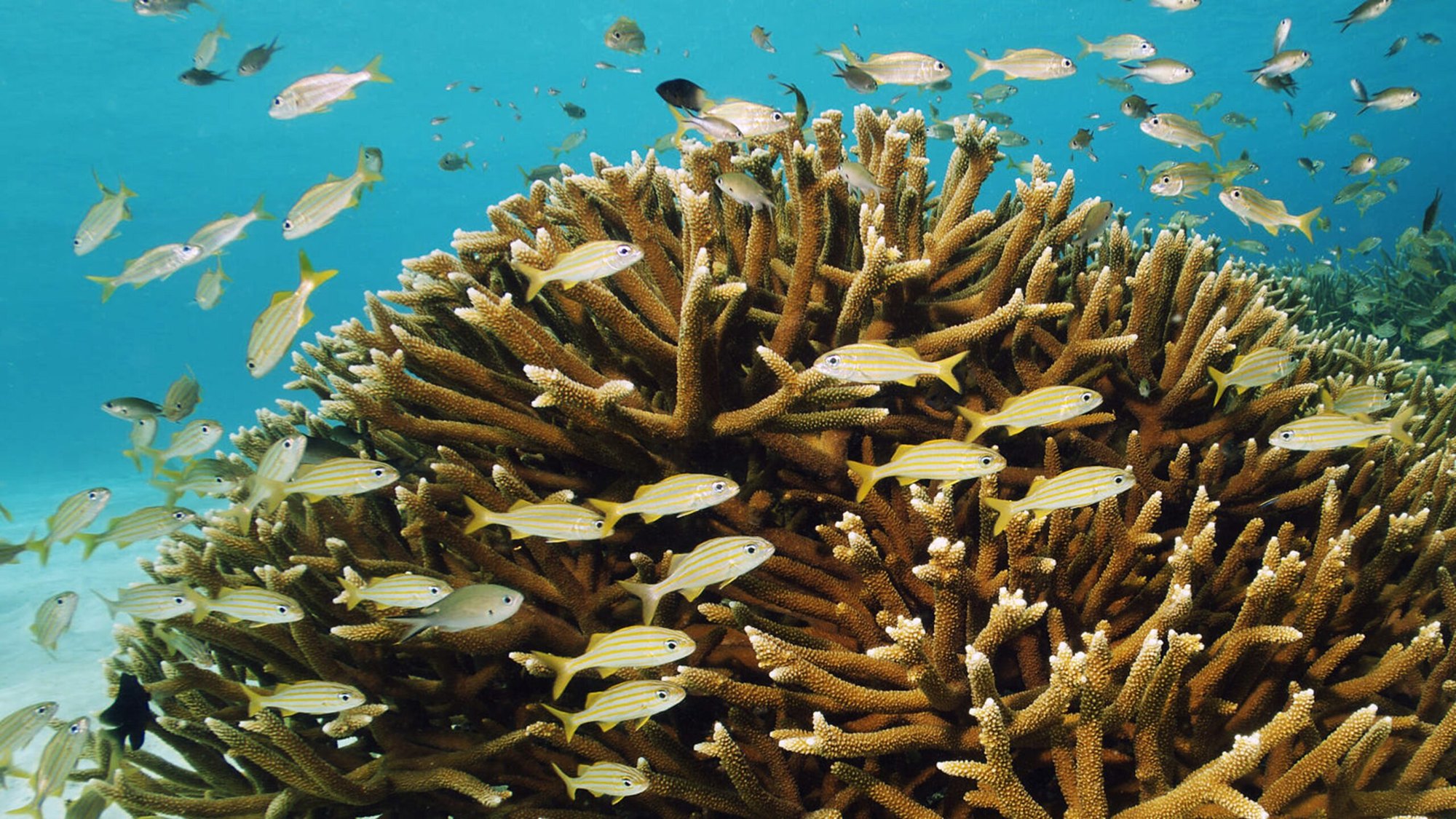
Key Biscayne residents who want to help save South Florida's disappearing coral can sign up to plant staghorn fragments on wild reefs alongside University of Miami researchers.
The Key Biscayne Community Foundation is promoting Rescue a Reef, a hands-on restoration program run by the UM Rosenstiel School of Marine, Atmospheric, and Earth Science. Volunteers join scientist-led boat expeditions that launch from the Divers Paradise dive shop at Crandon Marina, learn about coral conservation, collect coral fragments from nearby nurseries and plant them on local reefs.
Dalton Hesley, program director of Rescue a Reef and senior research associate at UM's Coral Restoration Lab, has been leading the effort to get more community members in the water. The program welcomes both scuba divers and snorkelers, according to the Rescue a Reef website.
"The expeditions are really fun," Hesley said at a Miami-Dade County discussion on extreme heat and Biscayne Bay on Aug. 21, Islander News reported. "There's so much you can do on land (too) where we see the needle move. It inspires you to do anything."
Florida's staghorn, elkhorn corals at 1% of former levels
Fewer than 300 genetically distinct staghorn corals and fewer than 150 genetically distinct elkhorn corals remain on Florida's Coral Reef, just 1% of their former abundance, according to the UM Rosenstiel School.
Rescue a Reef launched in 2015 as the public outreach arm of UM's Coral Restoration Lab. The lab uses science-based techniques to grow threatened coral species in land-based and offshore nurseries, creating a sustainable supply of healthy colonies for active reef restoration.
Part of a broader push to restore the reef
In August, 12 organizations led by the Rosenstiel School produced more than 1.5 million coral embryos during a spawning event funded through a four-year grant from the National Oceanic and Atmospheric Administration. Andrew Baker, a professor of marine biology and ecology at the Rosenstiel School and the grant's principal investigator, called the effort urgent in a UM news release.
Hesley told the Miami Herald in July that moving corals to onshore tanks this summer was a proactive step. It was a shift from the emergency response of 2023, when a marine heat wave damaged reefs across the Florida Keys.
How to sign up for an expedition
The foundation's listing directs residents to the Divers Paradise events calendar or to email [email protected] for upcoming expedition dates. Residents can also sign up at the Rescue a Reef website to receive notifications about future trips.
The foundation's office is at 240 Crandon Blvd., Suite 108, and can be reached at 305-361-2770.


.jpg)