
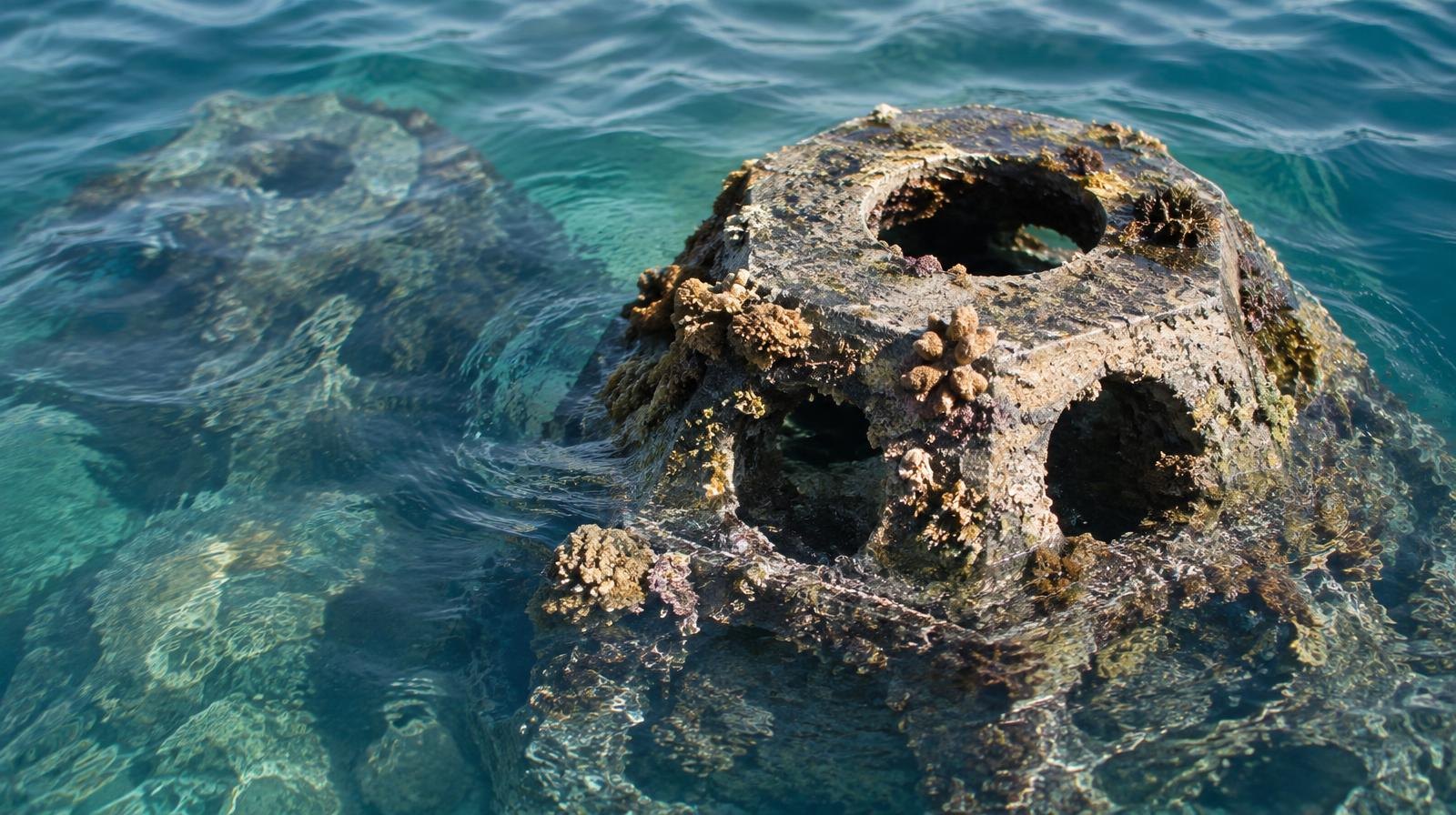
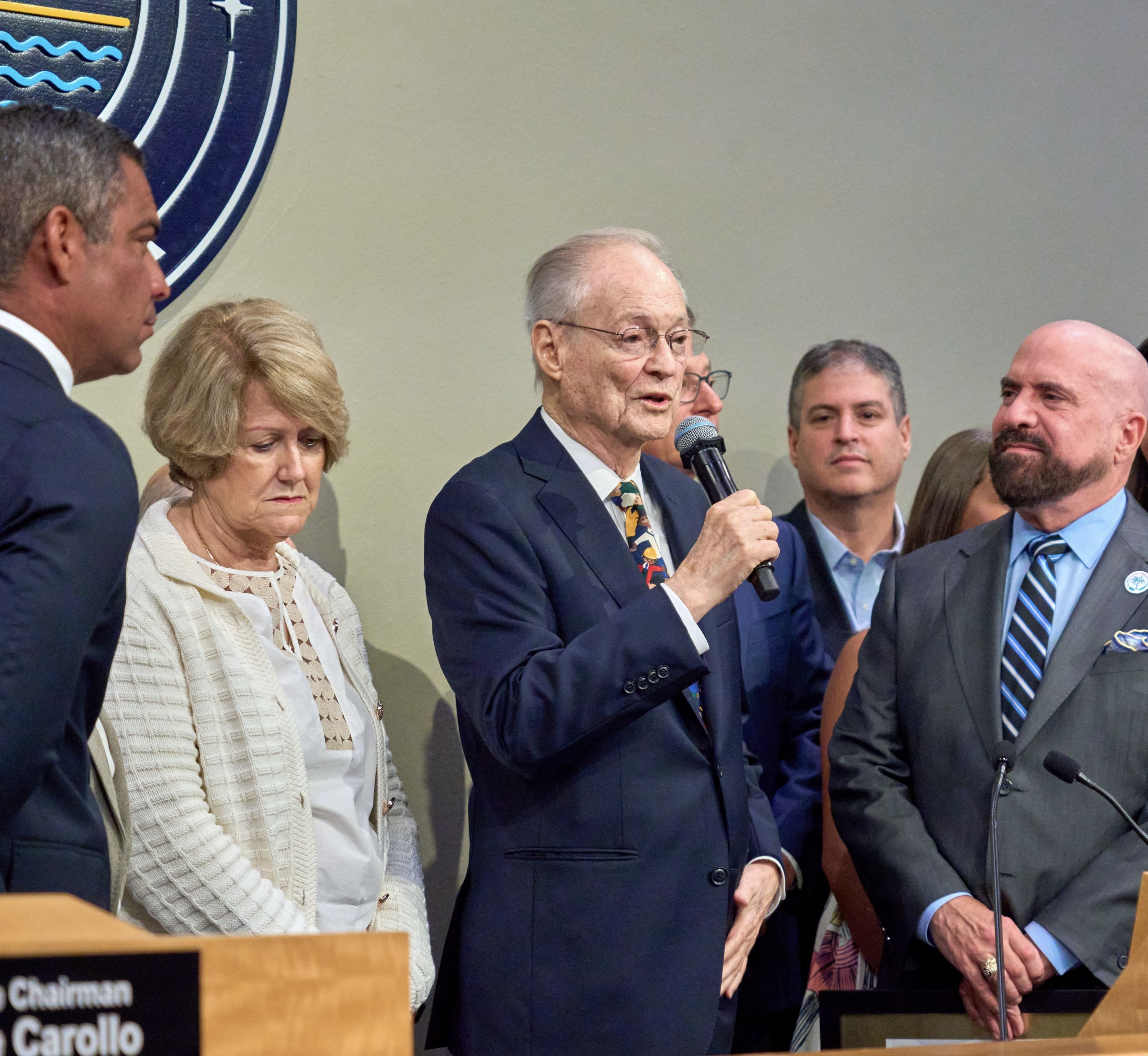
The Key Biscayne Village Council voted unanimously to spend $1.075 million on a two-year study that will determine whether an offshore artificial reef can protect the island's eroding Atlantic coastline.
The village hired engineering firm Moffatt & Nichol for the feasibility and preliminary design study, as first reported by Islander News on Tuesday. Roland Samimy, the village's chief resilience and sustainability officer, recommended the firm after a competitive request-for-qualifications process.
The village's 1.2-mile Atlantic shoreline loses roughly 12,000 cubic yards of sand each year, according to the village's scope document for the request. That erosion threatens an electrical substation, stormwater and sewer systems, Crandon Boulevard — the village's only evacuation route — and about $5 billion in nearby property values.
"We don't know it's a viable thing (yet), that's why we are doing the feasibility study," Samimy said.
Grants cover most of the study's cost
The village's share is $412,000. Federal and state grants cover the rest, including a $250,000 appropriation from the Florida Legislature approved earlier this year. The National Oceanic and Atmospheric Administration's National Centers for Coastal Ocean Science listed the project on its website Sept. 9, confirming federal involvement.
University partnership helped the firm win
Moffatt & Nichol scored 473 of 500 points in the evaluation, beating runner-up GHD Services, which scored 459, according to the village's award recommendation memo.
The evaluation committee cited the firm's partnership with the University of Miami Rosenstiel School of Marine, Atmospheric, and Earth Science as a key factor. The committee said the partnership gives the village direct access to local expertise and institutional knowledge.
Rosenstiel School researchers will handle wave and sediment modeling, help determine the best reef type and placement, assess regulatory hurdles and test whether corals can grow on the structures. The study scope also includes small-scale prototype fabrication and coral propagation field testing.
Construction costs and seagrass complicate next steps
If the study shows a reef is feasible, construction could cost roughly $20 million. Samimy called that figure a random guess, saying the eventual price depends on the reef's size.
The project comes as the U.S. Army Corps of Engineers' proposed shoreline defense work for Key Biscayne has been paused for about two years, according to Islander News. Beach renourishment on the island happens roughly every three years.
Village Manager Steven Williamson said Key Biscayne cannot simply borrow from Miami Beach's similar reef study because the two locations are completely different. Seagrass covers the ocean floor off Key Biscayne, while Miami Beach sits on a sandy bottom. That distinction shapes where a reef could go and how it would affect the marine environment.
The two-year contract with Moffatt & Nichol has no option to extend. The council would need to vote again before any construction could proceed.


.jpg)