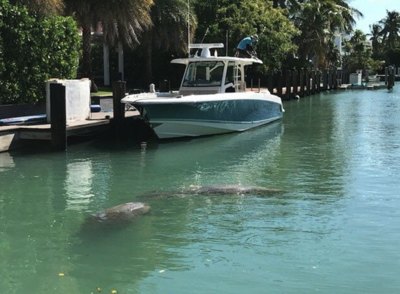
Manatees, American crocodiles and hawksbill sea turtles that live in Biscayne Bay's waters could lose a key layer of federal habitat protection Monday, Sept. 14, unless a new push by four Florida members of Congress succeeds.
Florida Lawmakers Demand Rule's Withdrawal
Reps. Debbie Wasserman Schultz, Kathy Castor, Darren Soto and Maxwell Frost sent a letter Tuesday, July 28, to Interior Secretary Doug Burgum and Commerce Secretary Howard Lutnick demanding they withdraw a final rule that strips the word "harm" of its habitat-protection meaning under the Endangered Species Act.
What the Rule Change Does
The rule, finalized Friday, July 10, and published in the Federal Register on Tuesday, July 14, removes the 50-year-old regulatory definition that treated significant habitat modification or degradation as illegal "harm" to protected wildlife. Without it, Earthjustice argues, activities that destroy seagrass beds or degrade nesting beaches would no longer automatically trigger ESA enforcement.
Why It Matters in Key Biscayne's Backyard
That matters in Key Biscayne's backyard.
The American crocodile's U.S. range is limited almost entirely to South Florida, including Biscayne Bay and the Florida Keys. Manatees depend on the bay's seagrass for food. Hawksbill sea turtles nest on beaches at Crandon Park and Bill Baggs Cape Florida State Park during a season that will still be active when the rule takes effect. As reported July 20, the rule change lands during peak nesting season for sea turtles on Key Biscayne's beaches.
Lawmakers Warn of Irreversible Habitat Loss
The four lawmakers wrote that removing habitat degradation from the definition of harm "amounts to an endorsement of habitat destruction" and warned the change "will significantly weaken the ESA and usher in the often-irreversible loss of habitat, hastening the extinction of plants and animals that are a vital part of our state's culture and tourism economy."
The congressional letter cited the ESA's track record: 291 species saved from extinction since 1973, a 99% success rate. It also invoked the 1995 U.S. Supreme Court ruling in Babbitt v. Sweet Home Chapter of Communities for a Great Oregon, which upheld the inclusion of habitat destruction in the definition of harm.
Interior Secretary Defends the Change
Burgum defended the change in a July 10 statement, saying it "restores common sense, respects private property, provides much-needed certainty for landowners and follows the statute Congress actually passed."
Rule Already Faces Legal Challenge
The rule is already facing legal challenge. Nine environmental groups, including the Center for Biological Diversity and the Sierra Club, filed a federal lawsuit Tuesday, July 14, in U.S. District Court in Seattle, represented by Earthjustice. The Swinomish Indian Tribal Community and the Squaxin Island Tribe filed a separate suit the same week.
"There's just no way to protect endangered animals like spotted owls, Florida panthers or grizzly bears without protecting the places they live," Noah Greenwald, endangered species co-director at the Center for Biological Diversity, said July 14 when the lawsuit was filed.
Habitat Loss Is a Leading Threat, Studies Show
A 2019 study found that 81% of species listed under the ESA between 1975 and 2017 were threatened or endangered due to habitat loss, according to Mother Jones. The U.S. Fish and Wildlife Service has also seen staffing cuts of nearly 20% under the current administration, according to records obtained by the Center for Biological Diversity and reported by WLRN.
Existing Permits Remain Unaffected
Existing incidental take permits and habitat conservation plans will remain in place under the new rule, according to a legal analysis by Davis Wright Tremaine. The change applies only going forward.
Key Dates
- Monday, Sept. 14 — ESA "harm" definition removal takes effect unless blocked by court order
- Ongoing — Federal lawsuit (Center for Biological Diversity v. Burgum) pending in U.S. District Court, Western District of Washington; no hearing date announced