Seagrass helps Biscayne Bay mangroves build soil as sea levels rise, FIU study finds
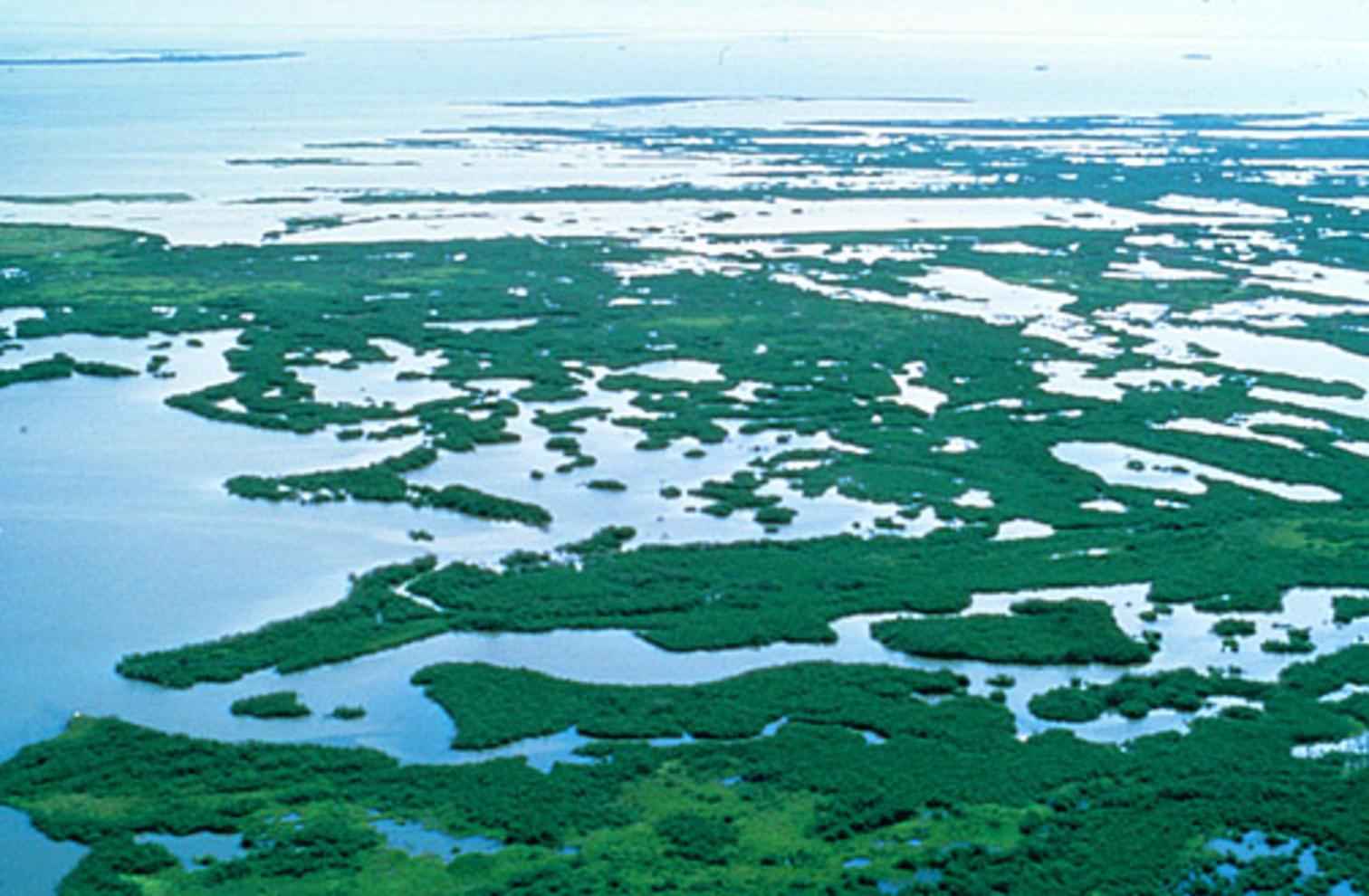
Dead seagrass washing into Biscayne Bay's mangrove forests is helping the wetlands build soil as sea levels rise, according to new research from Florida International University (FIU) and the National Park Service.
The research, published in the journal Estuaries and Coasts, found that dead seagrass blades and seaweed carried by tides into the mangroves contribute substantial organic material to the forest floor. Seagrass accounted for 36% to 53% of the carbon near the soil surface at the study sites inside Biscayne National Park.
The mangrove soil surface is gaining elevation at only 2 to 4 millimeters a year, while sea level is rising at approximately 8.5 millimeters a year, according to the researchers.
Seagrass alone will not close that gap. But it plays a far larger role in the mangroves' ability to build soil than scientists previously understood.
South Florida's mangroves were generally thought to build their soil largely from their own leaves, wood and roots. The new chemical analysis challenges that assumption. The highest seagrass contribution appeared in wetlands around Cutler Bay, where more than three times as much wrack reached the inner forest as at the other study site.
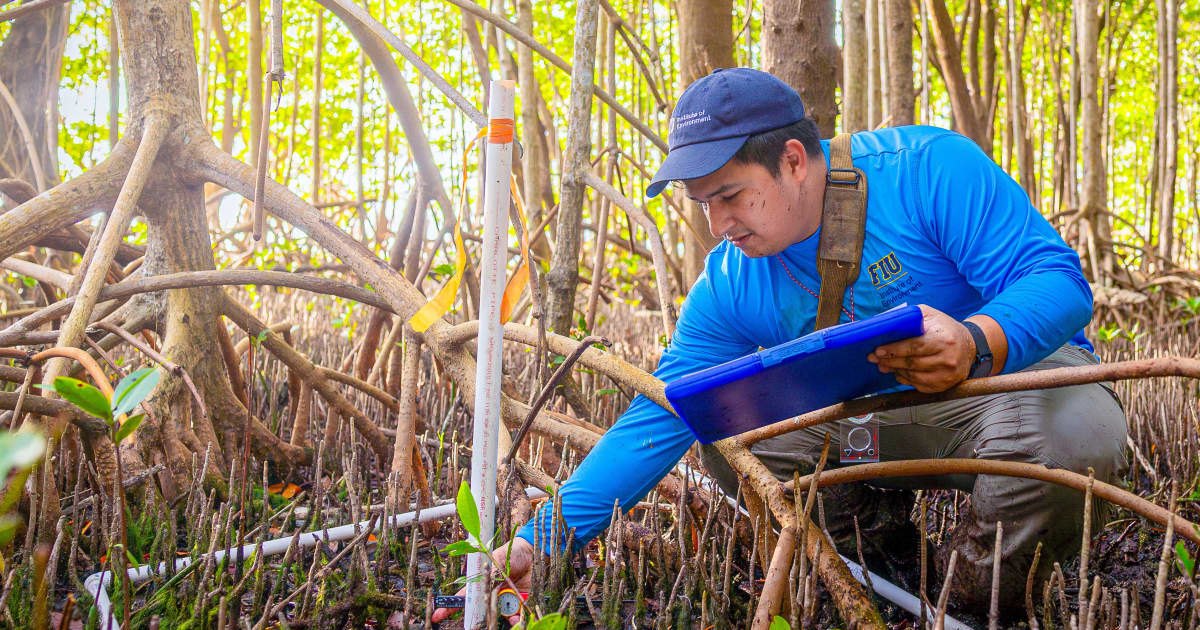
Kevin Montenegro, the study's lead author, spent two years paddling a 16-foot canoe into Biscayne National Park before sunrise each month. He and a field partner waded into the mangroves to record where wrack landed and how deep it piled at set points moving inland from the shoreline.
Every few months, they collected soil samples for chemical analysis. They also checked mesh bags of mangrove leaves and seagrass left on the swamp floor to measure how quickly each broke down. They combined those results with elevation measurements the National Park Service has taken at the same sites since 2011.
The mesh bags revealed something important. Where more wrack piled up, seagrass broke down more slowly. That left more material behind to contribute to the buildup of the forest floor.
The findings tie two ecosystems together: changes affecting seagrass offshore can also affect the supply of organic material reaching mangroves onshore, according to the FIU report. Mangroves also help protect Miami from storm surge and provide habitat for fish and other marine life.
"I see mangroves and seagrass ecosystems as part of our city and community, just like streetlights, schools and businesses," Montenegro said, according to FIU. "They're puzzle pieces that make our community whole. If we lose mangroves, we lose a huge piece of our community and identity — but also a major part of our infrastructure."
Montenegro studied both ecosystems before this project. As an FIU undergraduate, he worked in a seagrass lab studying how poor water quality damages seagrass beds. He later measured mangrove elevation with the National Park Service before returning to FIU for graduate school, where he conducted much of his research through FIU's CREST Center for Aquatic Chemistry and Environment in the Institute of Environment.
Montenegro earned his Ph.D. from FIU and now works in the Department of Environmental Resources Management for Miami-Dade County.
The study arrives as Biscayne Bay faces broader environmental stress. Miami-Dade County's 2026 Biscayne Bay Report Card found that every region of the bay remained in either poor or fair overall condition, with elevated nutrients and bacteria detected in canals and portions of the bay, according to a May 19 county announcement.
The county also reported localized improvements in water clarity and seagrass growth, particularly in northern Biscayne Bay, but warned that pollution and nutrient runoff continue to threaten the ecosystem.